

Aircon Servicing for Homes and Businesses
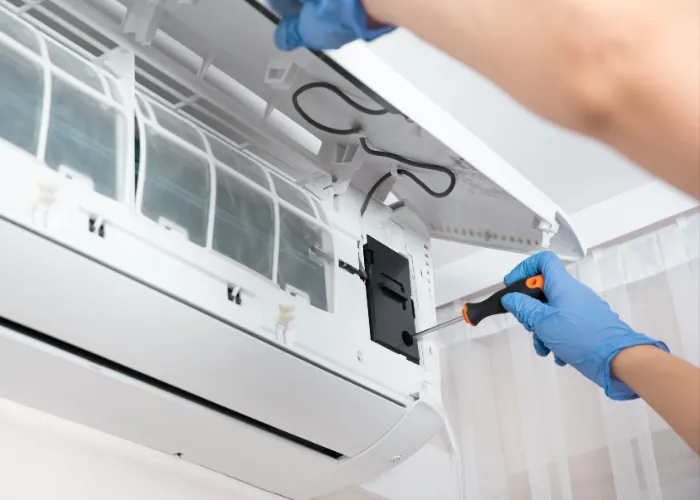
Proper aircon servicing means opening the unit up, cleaning what's inside, checking the electrics and testing how it performs, indoors and outdoors. ARS services all makes and models across Gauteng, on site.
An air conditioner pulls the room's air through a filter and across a cold coil, many times an hour, for months on end. Whatever slips past the filter, dust, pet hair, kitchen grease, pollen, settles on the coil and the fan behind it. Add the moisture the unit wrings out of the air and you have the start of the smell, the drip and the slow loss of cooling that most people notice only once it's bad.
A service deals with all of that before it turns into a repair. It also gives a trained eye the chance to spot a tired capacitor, a scorched terminal or a slow refrigerant leak while it's still a small job.
Why a Quick Filter Wipe Is Not a Service
Rinsing the filters is worth doing yourself every few weeks when the unit is working hard, and our guide on how to clean aircon filters shows you how. But the filters are the only part a filter clean reaches.
Behind them sits the evaporator coil, the blower wheel (the long barrel-shaped fan that pushes air into the room) and the drain tray. Outside, the condenser coil collects leaves, dust and grass cuttings. None of these get touched by a five-minute wipe, and they're exactly where performance is lost.
Our Aircon Servicing Checklist
This is what a full service covers on a typical split unit. Cassettes, ducted and floor-standing units follow the same principles, adapted to how they're built.
| Part | What gets done | Why it matters |
|---|---|---|
| Filters | Removed, washed, dried and refitted. Torn or brittle filters flagged for replacement. | Clogged filters choke airflow, cut cooling and can make the coil freeze. |
| Evaporator coil | Cleaned with a suitable coil cleaner, fins inspected. | A dirty coil can't absorb heat properly and holds the moisture that causes musty smells. |
| Blower wheel | Cleaned blade by blade where build-up is present. | Caked blades move less air, throw the fan off balance and add to odours. |
| Drain tray and line | Tray cleaned, line flushed and checked for a clear, continuous fall. | A blocked drain is the usual reason water runs down the wall. |
| Outdoor coil and fan | Debris cleared, coil cleaned, fan blade and motor checked. | A clogged condenser raises operating pressures, running costs and wear on the compressor. |
| Electrical connections | Terminals checked for tightness and heat marks, cables and isolator inspected, capacitor tested. | Loose connections overheat. A weak capacitor stops motors starting. |
| Pressures and temperatures | Air temperature measured going in and coming out, operating pressures checked where needed. | Readings outside the normal range point to a leak or an airflow fault early. |
| Mountings and pipework | Brackets, unit level and outdoor pipe insulation inspected. | Sun-perished insulation and loose brackets cause condensation, noise and vibration. |
| Test run | Unit run in cooling and heating, remote, louvres and thermostat response checked. | Confirms the unit works in both seasons, not just the one it's being used for today. |
How Often Should an Aircon Be Serviced?
Homes
For a bedroom or lounge unit used mostly in summer, once a year is a sensible baseline. Late winter or early spring is a good time, so it's ready before the first hot spell and the October rush. Homes with pets, nearby building work or a unit that also heats through winter may need it more often.
Businesses
Units that run all day, five or more days a week, collect dirt far faster. Offices, shops, salons and restaurants are commonly serviced every three to six months, with kitchens, gyms and dusty sites at the shorter end. If you have several units, a scheduled aircon maintenance plan keeps track of them so nothing gets missed.
There's more detail in our article on how often to service your aircon. If yours hasn't been opened up in over a year, book an aircon service or call 0861 995 092.
When a Service Finds a Fault
Sometimes aircon servicing reveals a problem: a capacitor reading well below its rating, a fan bearing starting to whine, or pressures that suggest a leak. We'll explain what we've found and quote it separately, so nothing is done without your say-so. Faults are handled through our aircon repairs service.
We service units in homes and offices throughout Gauteng, including aircon services in Midrand, aircon services in Kempton Park and air conditioning services in Roodepoort, as well as Fourways and Randburg.
Six Signs Your Unit Is Overdue
Most units give plenty of warning before they need a repair. These are the ones to watch for.
Weaker airflow
Even on the highest fan setting, less air comes out than it used to. Dirty filters, coil or blower wheel are the usual reason.
A musty smell on start-up
Moisture and dust on the coil and in the drain tray grow the kind of film that smells damp every time the unit starts.
Drips from the indoor unit
Water marks on the wall or a drip onto the floor usually mean the drain is partly blocked.
Longer running times
The room takes longer to cool and the unit rarely rests, which shows up on your electricity bill.
Ice on the pipes or coil
Frost on the copper pipes or the indoor coil means airflow is restricted or the refrigerant charge is low.
New noises
Rattles, clicks or a whine that weren't there before point to loose parts or a fan starting to wear.
Servicing Questions, Answered
It depends on the type of unit, how dirty it is and how easy the indoor and outdoor units are to reach. A wall split at ground level is quicker than a ceiling cassette or a condenser on a high bracket. We will give you an idea of timing when you book.
Yes, and you should. Switch the unit off, lift the front panel, slide the filters out, rinse them in lukewarm water and let them dry completely before refitting. It keeps airflow up between professional services but does not replace them.
If dirt is the cause, often yes. If the problem is a refrigerant leak, a failed capacitor or a faulty part, a service will find it but the fix is a separate repair, which we quote before doing.
No. A healthy, sealed system should not need refrigerant added. If the readings show the unit is low, there is a leak, and that needs to be found and repaired before any gas goes in.

Book a Service Before the Heat Arrives
Get your units cleaned, checked and tested by ARS anywhere in Gauteng.