
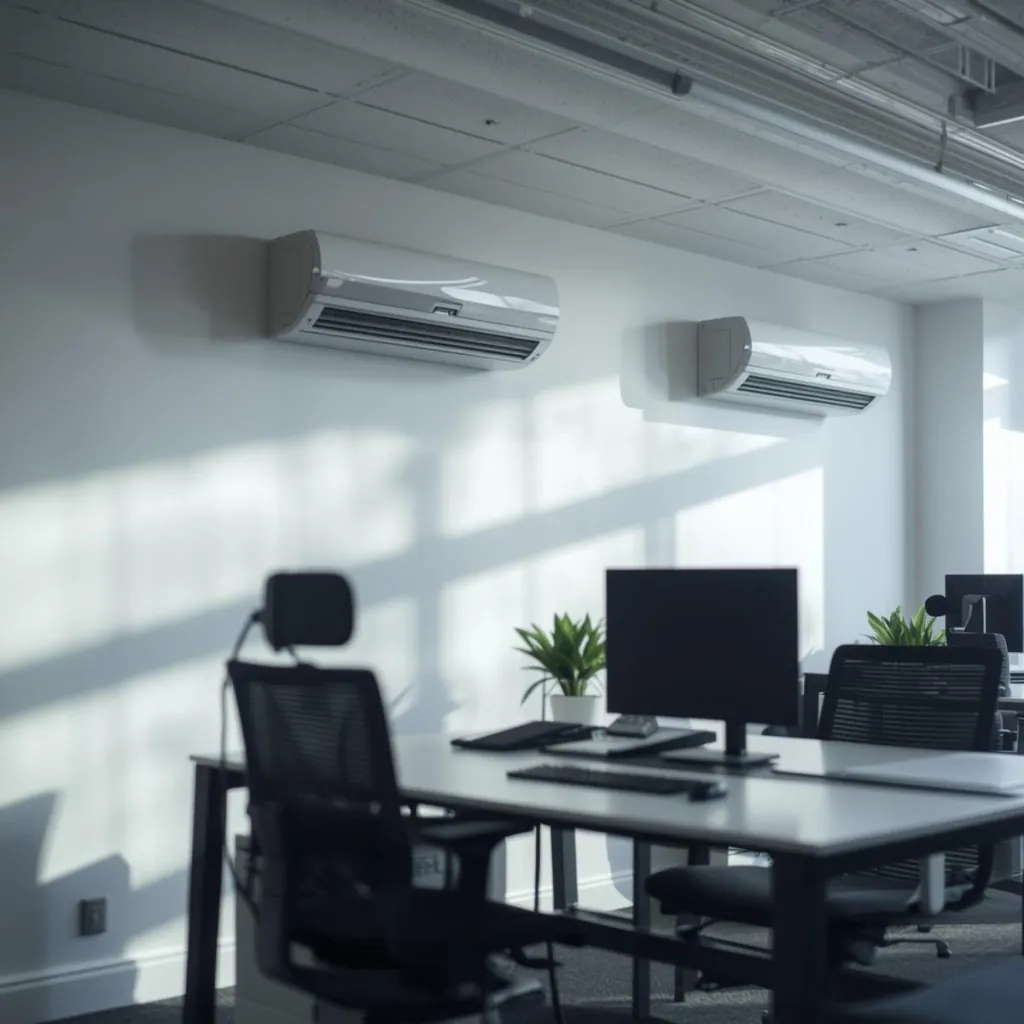
Commercial Air Conditioning for Gauteng Businesses
Staff who can concentrate, customers who stay and equipment that doesn't overheat. ARS installs, services and repairs commercial air conditioning for businesses across Gauteng, working around your hours rather than through them.
Premises We Cool and Heat
Each type of business puts different demands on its aircon, from greasy kitchen air to rooms full of people for two hours on a Sunday.
Offices
Retail Shops
Restaurants
Salons and Spas
Gyms
Schools
Churches and Halls
Clinics and Practices
Server Rooms
Showrooms
Commercial units work harder than domestic ones. They run for longer hours, cool rooms full of people and computers, and sit behind shopfronts and glass that soak up the afternoon sun. When one fails, the cost isn't only the repair: it's an office that can't concentrate, a salon that sends clients home or a restaurant that empties early.
That changes how commercial air conditioning should be planned, installed and maintained. Capacity has to account for occupancy and equipment, not just floor area. Work has to fit around trading hours. And with several units on one site, keeping track of each becomes a job in itself.
Sizing for People, Equipment and Glass
Floor area alone is a poor guide in commercial space. Every person in a room gives off heat, so a boardroom seating twelve needs more cooling than an office of the same size with two desks. Computers, printers, salon dryers, gym equipment and kitchen appliances all add to the load, and large shopfronts or glass facades facing north or west add more on summer afternoons.
That's why a commercial quote starts with a site visit rather than a formula. An undersized unit runs flat out all day, still leaves the room warm by mid-afternoon and wears out sooner. One sized for real occupancy and equipment can ease off once the space is comfortable.
Commercial Air Conditioning Systems: Which Suits Your Space?
Ceiling cassettes
Set flush into a suspended ceiling, a cassette spreads air in four directions, which suits open offices, shops and restaurants where a wall unit would leave corners warm. Only the grille is visible.
Ducted units
The unit sits hidden in the ceiling void and feeds air through ducts to several grilles. It's a clean look for boardrooms, reception areas and premium retail, but it needs enough ceiling space and careful duct design.
Multi-splits
One outdoor unit serving several indoor units saves space on walls and roofs, which matters in buildings where condenser positions are limited. The trade-off is that a fault on the outdoor unit affects every room connected to it.
Wall splits and under-ceiling units
Wall splits remain the practical choice for individual offices, consulting rooms and small shops. Under-ceiling and floor-standing units throw air further, which helps in church halls, gyms and showrooms with high ceilings.
Our article comparing split, cassette and ducted aircons goes deeper into the pros and cons, and our aircon installation page explains how each job is carried out.

Installing and Servicing Outside Business Hours
Core drilling, ceiling work and refrigerant pipework aren't things you want happening in a full office or during the lunch rush. Installations, services and non-urgent repairs can be planned for before opening, after closing or over weekends, and larger jobs split into phases so part of the premises stays usable. When something breaks without warning, our 24/7 emergency aircon repairs line is there for the failures that can't wait.
Landlords, Tenants and Who Maintains the Aircon
In leased premises, the lease normally says who is responsible for maintaining and repairing the air conditioning. Some leases put it on the landlord, many put day-to-day servicing on the tenant, and some split it between the two. It's worth checking before signing, not when a compressor fails in February.
A few practical points:
- Record the condition at the start. Note the age, make and working condition of each unit when you take occupation, so there's no argument about what was already worn.
- Get approval before adding units. Tenants usually need the landlord's written consent, and the building may have rules about condenser positions on roofs and facades.
- Keep the service history. Records show that maintenance obligations under the lease were met.
Maintenance and Record Keeping
Commercial units typically need servicing more often than home units, and with several on one site, it's easy for the back office or the server cupboard to be forgotten. An aircon maintenance plan schedules every unit at an interval suited to how hard it works, and logs what was done each visit. That history makes budgeting for replacements far easier than reacting to breakdowns.
We work with businesses across Gauteng, from offices in Rosebank to business parks in Midrand. To get started, request a commercial site quote or call 0861 995 092 to arrange a visit.
Commercial Aircon Questions
Yes. Installation, servicing and non-urgent repairs can be planned outside trading hours, including weekends, so staff and customers are not disrupted. Mention your hours when you request a quote.
Commonly every three to six months, depending on run hours and environment. Units in restaurants, gyms and dusty premises usually need the shorter interval.
It depends on your lease. Check the maintenance and repairs clauses, which often divide responsibility between landlord and tenant. If it is unclear, raise it with the landlord or managing agent before work is booked.
Yes, we work on all makes and models of split, cassette, ducted, floor-standing and under-ceiling units. Units still under warranty may need to go through the manufacturer's appointed service agent, so check your warranty terms first.

Keep Your Premises Comfortable and Open for Business
Request a free, no-obligation quote for installation, servicing or a maintenance plan.