
Aircon Not Cooling? The Common Causes
An aircon not cooling on a 32°C afternoon is miserable, but the cause is not always serious. Start with the simple checks below, then use the rest of this guide to understand which faults need a technician.
When a split unit blows air that feels barely cool, or room temperature never drops to what you set, it's tempting to assume the worst. Plenty of call-outs turn out to be a remote set to the wrong mode or filters packed with dust. Others are a genuine fault that only gets more expensive if the unit keeps running.
First, the checks you can safely do yourself
None of these involve opening the unit or touching wiring. Work through them in order before you book anyone.
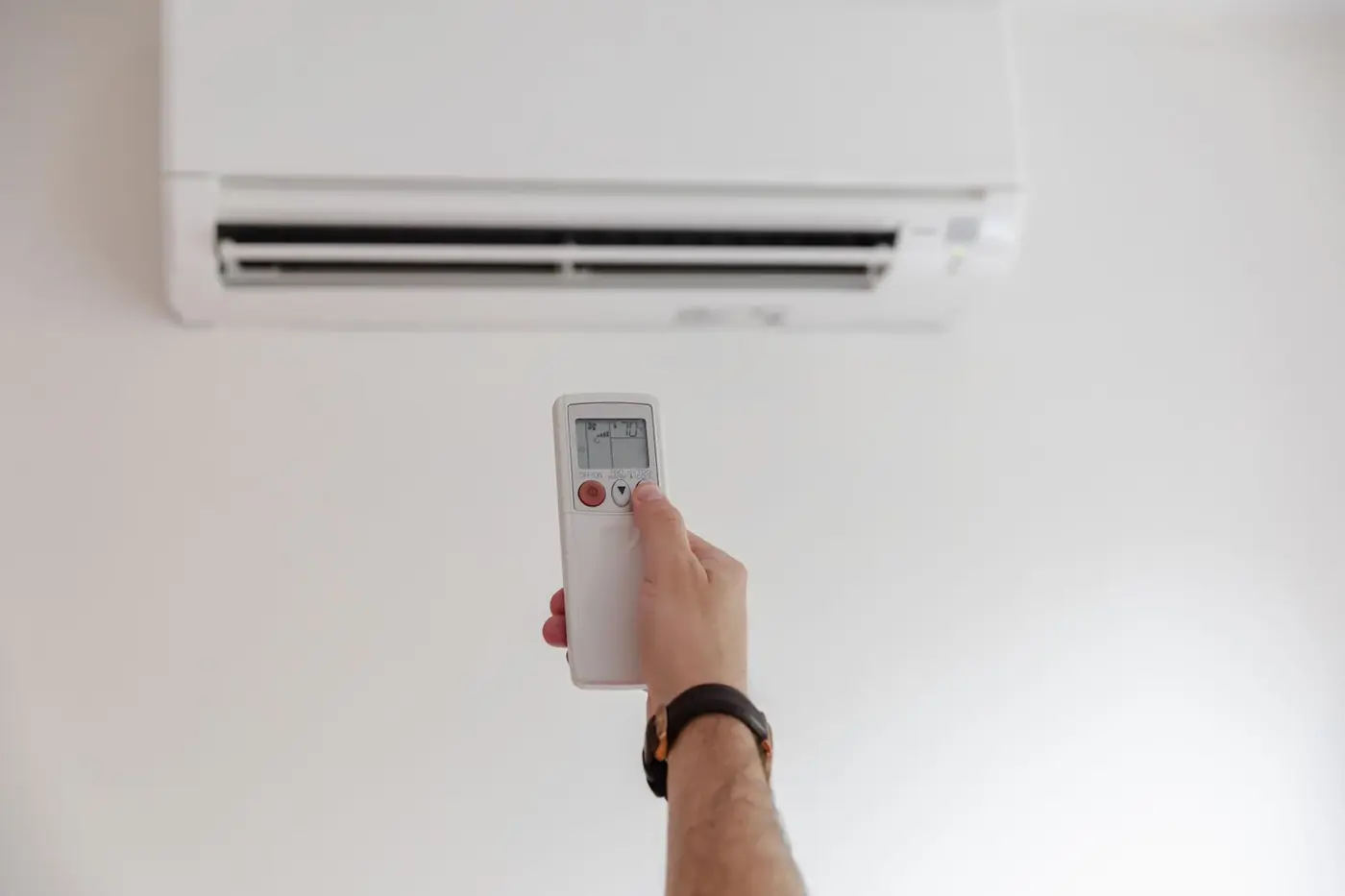
- Check the mode on the remote. It should show cool (usually a snowflake symbol). Fan, dry, auto or heat mode will not give you proper cooling. Make sure the set temperature is a few degrees below the room temperature.
- Replace the remote batteries. Weak batteries can send half a command or none at all. If the display on the remote is faint, swap them.
- Look for a timer or sleep setting. Sleep modes often raise the set temperature gradually through the night, which can feel like the unit has stopped cooling.
- Give it a few minutes. Most units wait a short while before the compressor starts after being switched on or after a power cut. That delay protects the compressor.
- Check the breaker. If the aircon breaker on the distribution board has tripped, you can reset it once. If it trips again, leave it off and call a technician.
- Clean the filters. Switch off at the isolator, lift the front panel and check the mesh filters. If they're grey and furry, rinse them, let them dry and refit them.
- Look at the outdoor unit. Without opening anything, check that leaves, plastic, shrubs or stored items aren't blocking the coil, and that the fan is turning while the unit is cooling.
- Close up the room. Open windows, a door into a passage or full afternoon sun through glass can overwhelm a unit that is otherwise fine.
Nine reasons for an aircon not cooling properly
If the quick checks didn't solve it, one of these is the likely culprit. The first three are often things you can see; the rest need proper diagnosis.
1. Wrong settings or a faulty remote
Covered above, but it's worth repeating because it's so common. A remote that was bumped onto heat or fan mode, or a unit set to 26 degrees by someone else, explains a surprising number of warm rooms.
2. Dirty filters
Filters trap dust before it reaches the indoor coil. Once they clog, far less air passes over the coil, so less heat is removed from the room. Left long enough, the coil can also freeze over.
3. A blocked outdoor coil
The outdoor unit (condenser) dumps the heat taken out of your home. If its fins are covered in dust, grass cuttings or leaves, it cannot get rid of that heat, pressures climb and cooling drops off. Outdoor units squeezed into narrow side passages or against walls with no breathing space suffer from the same problem.

4. Outdoor fan not spinning
If the compressor is running but the outdoor fan isn't turning, the unit overheats quickly and usually shuts itself down. Common causes are a failed fan capacitor, a seized fan motor bearing, or a control fault. A humming outdoor unit with a still fan is a sign to switch off and call for help.
5. Low refrigerant from a leak
Refrigerant carries heat out of the room. It travels in a sealed loop and does not get used up, so if the level is low, there is a leak. Signs include weak cooling, ice on the thin copper pipe at the outdoor unit, and the unit running for much longer than it used to. The fix is to find and repair the leak, then regas the system correctly. Our article on signs your aircon needs regassing explains this in detail.
6. Iced-up coils
Ice on the indoor coil blocks airflow, so the unit blows weakly and cools poorly. It's usually a symptom of another problem: dirty filters, low refrigerant or a slow fan. Switch the unit off and let the ice melt completely rather than chipping at it.
7. Capacitor or compressor faults
The compressor is the pump that moves refrigerant around the system. It relies on a run capacitor (on many units) and on the control board to start and keep going. A weak capacitor can leave the compressor humming and tripping on overload; a failing compressor may click on and off or not start at all. Diagnosing these needs a meter and an understanding of the unit's electrics.
8. The unit is the wrong size for the room
A 9,000 BTU unit in a large open-plan lounge with a double-volume ceiling will run flat out and still struggle. Undersizing is common when units are bought on price, or when a room has been extended since installation. If your aircon has never quite coped, read what size aircon you actually need before spending money on repairs.
9. A heatwave beyond what the unit was sized for
Every aircon has limits. During a run of very hot Gauteng days, a correctly sized unit may run constantly and still not reach your set temperature, especially in a west-facing room, an upstairs bedroom or under a poorly insulated roof. Closing curtains on sunny windows and starting the unit before the room heats up both help. If the room cools well in milder weather, an aircon not cooling fully on the hottest afternoons is probably healthy, just working at its limit.
When to stop troubleshooting and call a technician
- The breaker trips again after one reset. Something electrical is wrong. Leave it off.
- You see ice on pipes or coils. Switch off, let it thaw, and have the cause found.
- The outdoor unit hums, buzzes or clicks without running. Often a capacitor or compressor issue.
- An error code is flashing. Note it down; it helps the technician narrow down the fault.
- Clean filters made no difference. The problem is deeper in the system.
Refrigerant, electrical and internal work belongs with a qualified technician. If you still have an aircon not cooling after the basic checks, book an aircon repair or call 0861 995 092. We work on all makes and models through our aircon repair service, and if a business is losing trading hours because of a dead unit, our emergency aircon repairs run 24/7.
Quick answers
If the indoor fan runs but the air isn't cold, the compressor or outdoor fan may not be running, the filters or coils may be blocked, or refrigerant may be low because of a leak. Check the mode and filters first, then call a technician if nothing changes.
It can. Most units need a few minutes after power returns before the compressor restarts, and some return to default settings. Power surges when supply is restored can also damage control boards, so if the unit stays dead or shows an error after an outage, have it checked.
Only if low refrigerant is the actual cause, and only if the leak is repaired first. Adding gas to a unit with dirty coils, a failed fan or a weak capacitor will not solve the problem.
Get your cooling back on track
On-site aircon repairs across Gauteng for homes and businesses.