

What Size Aircon Do I Need for My Room?
"What size aircon do I need?" is usually the first question people ask, and the honest answer is that floor area only gets you halfway. Here is what the numbers mean, a rough starting guide, and the things that change it.
Buy too small and the unit runs flat out on a February afternoon without ever getting the room comfortable. Buy too big and you pay more for a unit that leaves the air feeling clammy. Getting the size right is the single most useful decision you make before an installation, so it's worth understanding how it works.
BTU in plain words
Split units are sold by their cooling capacity, usually given in BTU (British thermal units). Strictly it is BTU per hour: the amount of heat the aircon can pull out of the room every hour. A bigger number means more heat removed, not more electricity used, although larger units naturally draw more power when working hard.
You will also see capacity in kilowatts (kW) on spec sheets. One kW of cooling is roughly 3,412 BTU per hour, so a 12,000 BTU unit is about 3.5 kW of cooling. That kW figure is cooling output, not the unit's electricity consumption, which is a separate and smaller number.
The common home and office sizes
Wall-mounted splits in South Africa are mostly sold as 9,000, 12,000, 18,000 and 24,000 BTU units. Bigger spaces move into 30,000 BTU and above, often using cassettes or ducted systems rather than a wall split. Our guide to split, cassette or ducted aircons explains when each type fits.
So, what size aircon do I need? A rough room guide
If you're asking what size aircon do I need for a fairly ordinary room, this is where most people start. The table below reflects the kind of rule of thumb South African suppliers commonly use. Treat it as a first guess for a normal room with average sun and a standard ceiling, not as a recommendation.
| Unit size | Approx. cooling output | Indicative room size (rough guide only) |
|---|---|---|
| 9,000 BTU | About 2.6 kW | About 15 to 18 m²: a typical bedroom or small office |
| 12,000 BTU | About 3.5 kW | About 20 to 25 m²: a main bedroom or small lounge |
| 18,000 BTU | About 5.3 kW | About 30 to 35 m²: a larger lounge or open office area |
| 24,000 BTU | About 7.0 kW | About 40 to 45 m²: a big open-plan living area |
| 30,000 BTU and up | About 8.8 kW and up | Larger spaces: needs a proper load calculation |
Notice the gaps between the bands, and that published guides don't always agree with each other. A 19 m² room or a 28 m² room sits between sizes, and that is exactly where the details below tip the choice up or down a size.
Why the square-metre rule is only a starting point
Two rooms with the same floor area can need very different units. These are the factors a good installer looks at before suggesting a size.
Sun and orientation
In South Africa, north-facing rooms catch sun for much of the day and west-facing rooms take the harsh afternoon heat. Big windows, especially without blinds or tinting, let in a lot of heat. A west-facing lounge with sliding doors can need noticeably more capacity than a shaded bedroom of the same size.
Ceiling height and roof
The rough guide assumes a standard ceiling. Double-volume rooms and high pitched ceilings hold much more air. Rooms directly under a metal roof or a flat concrete slab also pick up more heat than rooms under a well-insulated ceiling.
Insulation and draughts
Ceiling insulation, closed doors and decent window seals keep cooled air in. A room that leaks air to the passage or roof space keeps letting warm air back in.
Open-plan layouts
If the lounge opens onto the kitchen, dining room and stairwell, you are cooling all of that space, not just the lounge. Measure everything that is connected without a door.
Kitchens, people and electronics
Stoves, ovens and kettles add heat. So do people: a boardroom with ten people in it behaves very differently to the same room with two. Computers, large TVs, gaming setups and server cabinets all give off heat too, which matters in home offices and small businesses.
Where in Gauteng you live
Pretoria and Centurion sit lower than Johannesburg and generally run warmer, so the same room can work harder there in summer. On the Highveld proper, cold winter nights also matter if you plan to use the aircon for heating, since heating output is worth checking alongside cooling output.
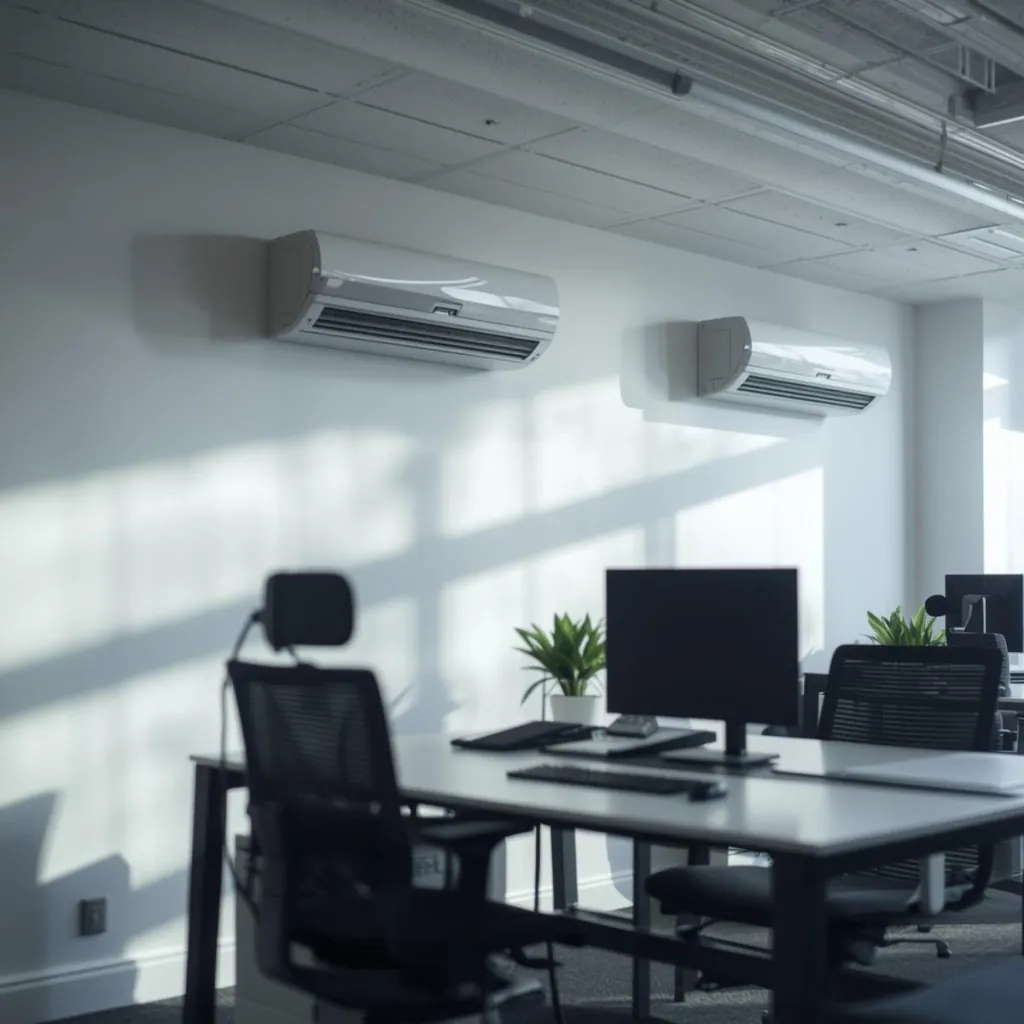
Oversized versus undersized: what goes wrong
When the unit is too small
- It never catches up. On the hottest days the room stays warm however low you set the remote.
- It runs constantly. More running hours means higher electricity bills and more wear on the compressor and fans.
When the unit is too big
- Short cycling. A fixed-speed unit cools the air fast, switches off, then starts again soon after. Frequent starts add wear.
- Clammy air. Short runs don't give the coil long enough to pull moisture out, so the room feels cool but damp.
- Higher upfront cost. You pay for capacity you don't use, and sometimes for heavier electrical work.
Inverter units soften the oversizing problem because they can slow down rather than switch off, but a badly oversized inverter can still end up cycling at its lowest speed. Our article on inverter vs non-inverter aircons explains the difference.
Why a site assessment beats a calculator
The most reliable answer to "what size aircon do I need?" comes from someone standing in the room. Online calculators can't see your west-facing glass, the open stairwell or the server cabinet in the corner. On a site visit, a technician measures the space, checks sun exposure and ceiling height, and also looks at the practical side: where the indoor and outdoor units can go, the pipe run between them, and whether the electrical supply needs a dedicated circuit. All of that feeds into a sensible recommendation for homes and business premises.
If you're planning a new unit, request a free, no-obligation quote or call 0861 995 092, and we'll size it for the room you actually have. You can read more about the process on our aircon installation page.
For a typical bedroom of about 15 to 18 square metres with normal sun exposure, 9,000 BTU is a common choice. A sunny, west-facing or larger bedroom may be better suited to 12,000 BTU.
Not really. An oversized unit costs more, can leave the room feeling damp, and a fixed-speed model will switch on and off more often. The right size is better than the biggest size.
A single wall split cools the room it is in and maybe some of the space directly connected to it. Cooling several rooms usually means several splits, a multi-split system or a ducted system.
It can. Heating and cooling outputs are listed separately on spec sheets, so if winter heating matters to you, the installer should check both figures against the room.
Get the Size Right the First Time
Book a site assessment and free quote for your home or business in Gauteng.