
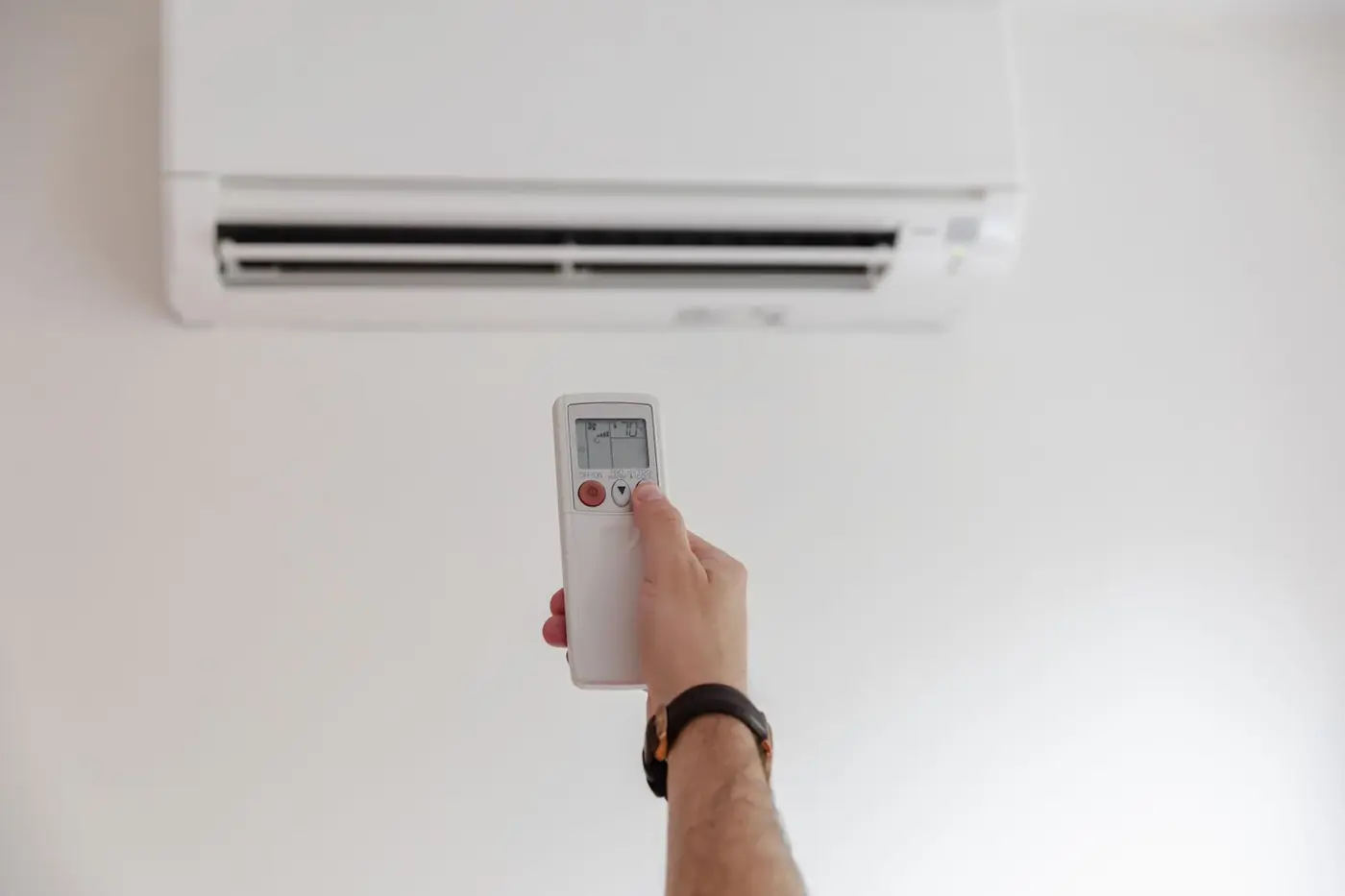
Inverter vs Non-Inverter Aircons Compared
The inverter vs non-inverter aircon question comes up on almost every quote. Both types cool a room; they just control the compressor differently, and that affects running costs, comfort, noise and how the unit behaves on backup power.
First, a South African naming problem. "Inverter" here also means the box in the garage that runs the house off batteries during load shedding. An inverter aircon has nothing to do with that. It refers to the electronics inside the air conditioner that control how fast its compressor runs.
How each type controls the compressor
The compressor is the heart of an aircon. It pumps refrigerant around the system, and it uses most of the electricity. The difference between the two types comes down to how it is switched.
Non-inverter (fixed-speed)
A fixed-speed compressor has two settings: full power or off. When the room is warmer than the set temperature, it runs flat out. Once the room is cool enough, it stops. When the temperature drifts back up, it starts again at full power. The room temperature rises and falls in a gentle saw-tooth as a result.
Inverter
An inverter unit uses electronics to vary the compressor's speed. It works hard to bring the room down to temperature, then slows right down and keeps ticking over to hold it there, rather than stopping and starting. Think of cruising at a steady speed instead of accelerating, braking and accelerating again.
Inverter vs non-inverter aircon at a glance
| Inverter | Non-inverter (fixed-speed) | |
|---|---|---|
| Compressor control | Variable speed | Full power or off |
| Running costs | Generally lower, especially with long daily use | Generally higher with long daily use |
| Temperature | Steady | Swings up and down around the setting |
| Noise | Usually quieter once settled | Noticeable each time the compressor kicks in |
| Purchase price | Higher | Lower |
| Starting surge | Gentler ramp-up | Sharp surge at every start |
| Electronics | More complex control boards | Simpler controls |
What happens to your electricity bill
Starting a compressor at full power and stopping it again over and over wastes energy. An inverter avoids most of those starts and spends much of its time running gently, which is why inverter units are generally cheaper to run. The saving is biggest when the aircon runs for long stretches: a home office cooled all day, a bedroom through summer nights, or a shop open from morning to evening.
Be wary of anyone quoting a fixed percentage saving. The real difference depends on the specific models, how well the unit is sized, how many hours it runs and how hot the room gets. To compare two units fairly, look at the energy label and the efficiency figures on the spec sheet rather than marketing claims. Our guide to lowering aircon running costs covers habits that help whichever type you own.
How each type feels in a bedroom or office
Because an inverter holds the temperature steadily, rooms tend to feel more even, without the cycle of slightly too cold then slightly too warm. It also tends to be quieter once the room has cooled down, since the compressor and fans are running slowly instead of starting at full speed. That matters most in bedrooms and offices.
A fixed-speed unit can still be perfectly comfortable if it is sized correctly. Problems usually appear when it is oversized and short cycles, as explained in our article on choosing the right aircon size.

Purchase price and repair costs over the years
Inverter splits cost more to buy than comparable fixed-speed models. Over years of regular use, lower running costs can make up the difference, but how quickly depends on how much you use the unit.
These units also rely on more electronics, including a control board in the outdoor unit that drives the compressor. Those boards are sensitive to lightning and power surges, and replacing one can be a significant part of a repair bill. Surge protection and a healthy electrical supply are worth the effort. If an inverter unit has stopped after a storm, our aircon repairs team can diagnose it on site.
When a non-inverter still makes sense
- Occasional use. A guest room or a spare office cooled a few hours a month won't run long enough for the efficiency gap to matter much.
- A tight budget right now. If the choice is a correctly sized fixed-speed unit or an undersized inverter, the right size wins.
- Simplicity. Fewer electronics can mean fewer things to go wrong after a storm, though it is not a guarantee.
For a unit that will run daily through a Gauteng summer, an inverter is usually the better long-term buy.
Load shedding, solar and backup power
This is where the difference becomes very practical. A fixed-speed compressor pulls a sharp surge of current every time it starts, several times what it draws once running. A home backup inverter has to handle that spike, and a smaller system can trip or shut down when the aircon kicks in. Inverter aircons ramp up gradually, so the starting surge is much gentler and the unit is generally easier for a solar or battery system to support.
Whichever type you have, switch it off before a scheduled outage and wait a few minutes after power returns before turning it on again. The surge when supply comes back is hard on electronics. There is more detail in our article on running an aircon on solar or inverter backup.
Which type suits your home or business
In most homes, the inverter vs non-inverter aircon choice comes down to hours of use. Choose an inverter if the aircon will run most days, you value quiet and steady temperatures, or you want it to work alongside solar or backup power. Consider a fixed-speed unit only for light, occasional use where the purchase price matters most. Either way, correct sizing and a careful installation affect running costs as much as the type you choose.
If you're weighing up options for a new unit, ask for a free quote or call 0861 995 092. We'll look at how you'll use the room and recommend accordingly as part of our aircon installation service, and regular servicing keeps either type running efficiently.
Check the model label on the indoor or outdoor unit, the manual or the spec sheet, which usually say inverter if it is one. You can also listen: an inverter tends to keep running quietly once the room is cool, while a fixed-speed unit's outdoor compressor clearly switches off and on.
No. The inverter function depends on the compressor and control electronics the unit was built with. Getting inverter operation means replacing the unit.
Inverters are most efficient when left to hold a steady temperature during the hours you need cooling. Switching off when you leave for the day is sensible, but repeatedly switching on and off over short periods works against how they are designed.
Pick the Right Aircon for How You Live
Get a free, no-obligation quote on a new inverter or fixed-speed unit.